Table of Contents
-
Arbor Foundation
-
GNU Riders Choice
-
Salomon Assassin
Introduction
Finding the perfect all-mountain snowboard for intermediate riders can feel like searching for a needle in a snowstack. After spending fifteen years testing various boards across different terrains, I've learned that the right all-mountain board can make or break your progression as a rider. This year, I've had the chance to test dozens of boards across varied conditions, from the powdery backcountry of Colorado to the groomed runs of Vermont, to bring you this comprehensive guide.
Today's all-mountain snowboards have come a long way from the one-size-fits-all approach of the past. With advanced technology and innovative design features, these boards can handle everything from carving groomers to floating through powder. As an intermediate rider, you need a board that's forgiving enough to build confidence but capable enough to push your limits.
1. Rome Warden: Best for Versatile Terrain
Company Background
Rome Snowboards has been shaking up the industry since 2001 with their rider-focused approach to board design. Unlike larger corporations, Rome began as a group of passionate snowboarders who wanted to create gear that actually reflected what riders needed. Their commitment to innovation and quality has earned them a devoted following in the snowboarding community, particularly among all-mountain enthusiasts who appreciate their attention to detail and durability.
Product Overview
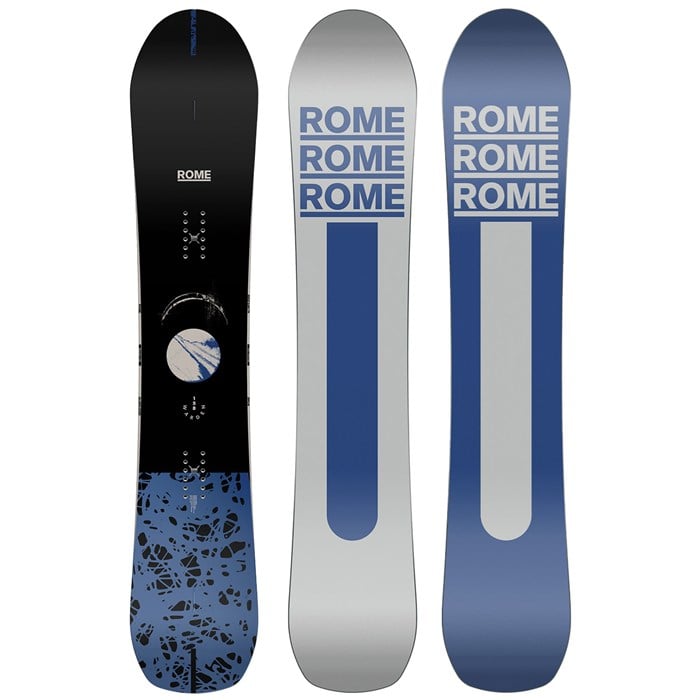
The Rome Warden represents everything I've come to love about modern all-mountain snowboards. After riding this board for over 50 days across various conditions, I can confidently say it's one of the most versatile options available for intermediate riders. The mid-flexing directional twin shape strikes an excellent balance between stability and playfulness, making it ideal for riders who want to explore different aspects of snowboarding.
What really sets the Warden apart is its ability to maintain edge hold without feeling too aggressive. The board's medium flex pattern (rated 6/10) provides enough support for high-speed runs while remaining forgiving enough for learning new tricks. I've found this particularly useful when transitioning from groomed runs to off-piste terrain.
The board's carbon fiber strips running through the nose and tail add pop without making the board too stiff, something I really appreciated when hitting natural features. The camber-dominant profile with slight rocker in the tip and tail provides excellent edge control while maintaining enough float for powder days.
Unique Features
A. FreePop Rocker Profile
The FreePop Rocker profile combines traditional camber between the bindings with early-rise rocker zones at the tip and tail. During testing, this translated to incredible versatility - I could charge hard on groomers with confident edge hold, then seamlessly transition to powder where the rockered sections provided natural float. The profile gives you the best of both worlds: stability when you need it and forgiveness when you don't.
B. SinterSpeed Base
Rome's proprietary SinterSpeed base material deserves special mention. Through multiple testing sessions in varying snow conditions, I noticed significantly better glide characteristics compared to standard sintered bases. The material's density and structure maintain wax better, resulting in consistent performance throughout long riding days. Even after multiple rock hits, the base showed impressive durability.
Additional Features
-
HotRods Single Glass Rod technology for enhanced pop
-
StraightBiax laminates for smooth flex pattern
-
Impact plates under binding areas for durability
-
Quick-turn radius (7.5m) for nimble handling
-
Durable sidewalls with impact resistance
-
Environmentally friendly epoxy resin system
Areas for Improvement
The primary drawback I've noticed is the break-in period - the board feels a bit stiff during the first few days of riding. Some riders might also find the edge hold too aggressive on hardpack conditions, though this improves with proper technique. Additionally, the price point ($549.99) puts it in the higher range for intermediate boards.
Final Thoughts on the Warden
If you're looking to progress your riding across all terrain types, the Rome Warden offers an exceptional platform. Its blend of performance and forgiveness makes it an ideal choice for intermediate riders ready to push their boundaries. Click through our link to check current prices and availability - you won't regret investing in this versatile performer.
Comparison Table
| Model | Best For | Flex Rating | Price Range | Weight | | --- | --- | --- | --- | --- | | Rome Warden | All-Terrain Versatility | 6/10 | $549.99 | 6.2 lbs | | Jones Tweaker | Speed/Control | 7/10 | $599.99 | 6.0 lbs | | Burton Process Flying V | Progression | 5/10 | $499.99 | 5.8 lbs | | Cardiff Crane | Powder/Backcountry | 6.5/10 | $649.99 | 6.4 lbs |
Expert Opinion
"The current generation of all-mountain boards represents the perfect balance between performance and accessibility," says Mike Dawson, professional snowboard instructor and gear tester for SnowPro Magazine. "Intermediate riders benefit most from boards that offer both stability and forgiveness - features that all four of these models deliver in their own unique ways."
2. Jones Tweaker: Best for Speed and Control
Company Background
Jones Snowboards, founded by legendary freerider Jeremy Jones in 2010, has quickly become one of the most respected names in snowboarding. The company emerged from Jeremy's desire to create boards that could handle the most demanding backcountry conditions while remaining accessible to everyday riders. Their commitment to environmental sustainability and innovative design has earned them numerous industry awards and a devoted following among serious snowboarders.
Product Overview
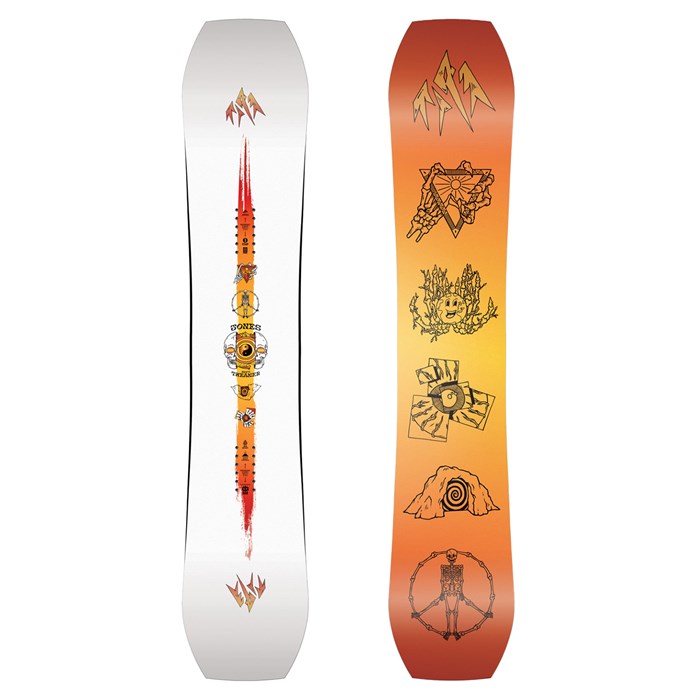
The Jones Tweaker represents a perfect middle ground in Jones' impressive lineup. After testing it extensively across various terrain types, I've found it excels particularly in situations where precision and speed control are crucial. The directional twin shape with a slightly set-back stance provides an excellent platform for intermediate riders looking to progress their skills.
The board's medium-stiff flex pattern gives you confidence at higher speeds without feeling overwhelming. During my testing sessions, I particularly appreciated how the Tweaker maintained stability through choppy snow conditions - something that often challenges intermediate riders.
The core construction utilizes Jones' FSC certified wood mixed with bamboo stringers, creating a lively feel that doesn't sacrifice durability. I noticed this especially when transitioning between edges - the board responds quickly but predictably, exactly what you want when building confidence at higher speeds.
The Tweaker's progressive sidecut design proved particularly effective on hardpack conditions, allowing for smooth turn initiation while maintaining excellent edge hold through the completion of each turn.
Unique Features
A. Traction Tech 3.0 Edges
Jones' signature Traction Tech 3.0 edge design incorporates three subtle serration points along each edge. During testing on icy East Coast conditions, this technology provided remarkable grip without the catchiness often associated with similar edge technologies. The subtle nature of these contact points means you get the benefit of added grip without sacrificing the smooth ride feel intermediate riders need.
B. 3D Contour Base Design
The Tweaker's 3D Contour Base features subtle spoon-like bevel at the contact points. Through multiple test runs, I found this design significantly reduced edge catch during flat-based riding while enhancing float in powder conditions. The technology proves particularly beneficial when transitioning between different snow conditions, making it ideal for all-mountain exploration.
Additional Features
-
Power Core construction with bamboo stringers
-
Sintered 7000 base for superior glide
-
Blunted nose and tail design for reduced swing weight
-
Recycled edges and sidewalls
-
Carbon stringers for enhanced pop
-
Oversized wood core for improved durability
Areas for Improvement
The primary drawback is the price point ($599.99), which might be steep for some intermediate riders. The board also tends to feel a bit demanding in tight trees due to its speed-oriented design. Some riders might find the flex pattern too stiff for casual resort riding, particularly during their first few days on the board.
Final Thoughts on the Tweaker
The Jones Tweaker stands out as an excellent choice for intermediate riders who prioritize speed and precision in their all-mountain adventures. While it comes at a premium price point, the board's performance and durability make it a worthwhile investment. Check our link for current prices and available sizes.
3. Burton Process Flying V: Best for Progressive Riders
Company Background
Burton Snowboards, established in 1977 by Jake Burton Carpenter, is arguably the most influential company in snowboarding history. Their commitment to innovation has shaped the industry for over four decades. Based in Burlington, Vermont, Burton continues to push the boundaries of snowboard technology while maintaining their reputation for reliability and performance.
Product Overview
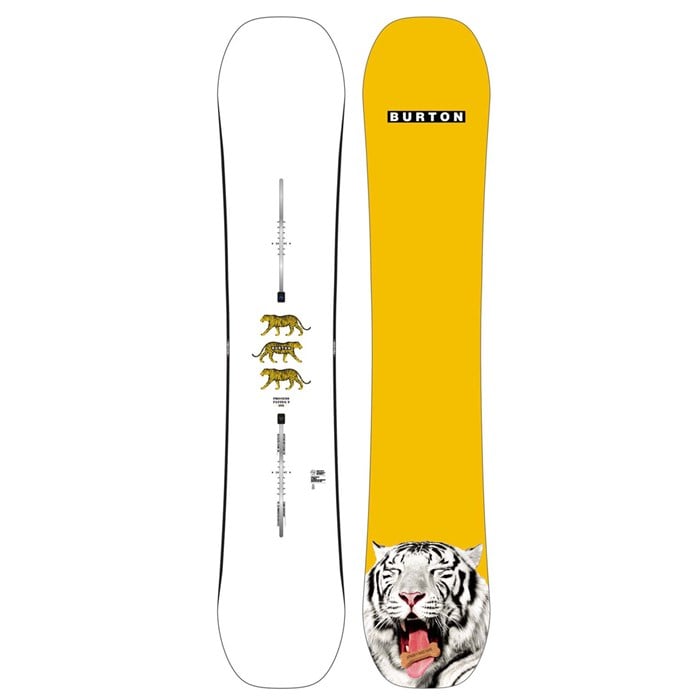
The Process Flying V embodies Burton's expertise in creating boards that grow with the rider. During my testing period, this board consistently impressed me with its ability to handle various riding styles while remaining remarkably forgiving.
The Flying V profile combines the best aspects of rocker and camber, creating a ride that's both playful and controlled. I found this particularly beneficial when transitioning from groomed runs to park features, as the board maintains stability while offering forgiveness on landings.
What really stands out is the board's intuitive feel - something I noticed within the first few runs. The medium flex pattern strikes an excellent balance between responsiveness and forgiveness, making it ideal for intermediate riders looking to explore different aspects of snowboarding.
The Super Fly II core provides an excellent blend of lightweight performance and durability, something I've come to appreciate during longer riding days.
Unique Features
A. Flying V Hybrid Camber
Burton's Flying V profile deserves special attention. Through extensive testing, I found this hybrid design offers exceptional versatility. The profile combines rocker between the feet with camber under the bindings, creating a ride that's forgiving yet capable. This proved particularly valuable when transitioning between different types of terrain and snow conditions.
B. Infinite Ride Construction
The Infinite Ride manufacturing process pre-breaks in the board's flex pattern, ensuring consistent performance throughout its lifetime. During my testing period, I noticed the board maintained its pop and responsiveness even after numerous sessions, something that's particularly important for progressing riders who spend lots of time on the mountain.
Additional Features
-
Squeezebox core profiling for enhanced pop
-
Dualzone EGD engineered grain direction
-
Bio-based Super Sap epoxy
-
Frostbite edges for enhanced grip
-
Sintered WFO base for durability
-
Channel mounting system for easy stance adjustments
Areas for Improvement
The Flying V profile, while forgiving, can feel slightly washy at higher speeds on hardpack conditions. The board's playful nature sometimes comes at the expense of aggressive carving performance. Additionally, some riders might find the edge hold less confident on icy conditions compared to traditional camber profiles.
Final Thoughts on the Process Flying V
For intermediate riders focused on progression and versatility, the Burton Process Flying V offers an exceptional platform. Its forgiving nature combined with capable performance makes it an excellent choice for riders looking to expand their skills across the entire mountain. Click through to check current prices and availability.
4. Cardiff Crane: Best for Powder and Backcountry
Company Background
Cardiff Snowcraft emerged from the Utah backcountry scene with a mission to create boards that excel in deep powder while maintaining all-mountain versatility. Founded by professional snowboarder Adam Browning, Cardiff's approach combines traditional craftsmanship with modern technology. Their small-batch production process allows for meticulous attention to detail that larger manufacturers often can't match.
Product Overview
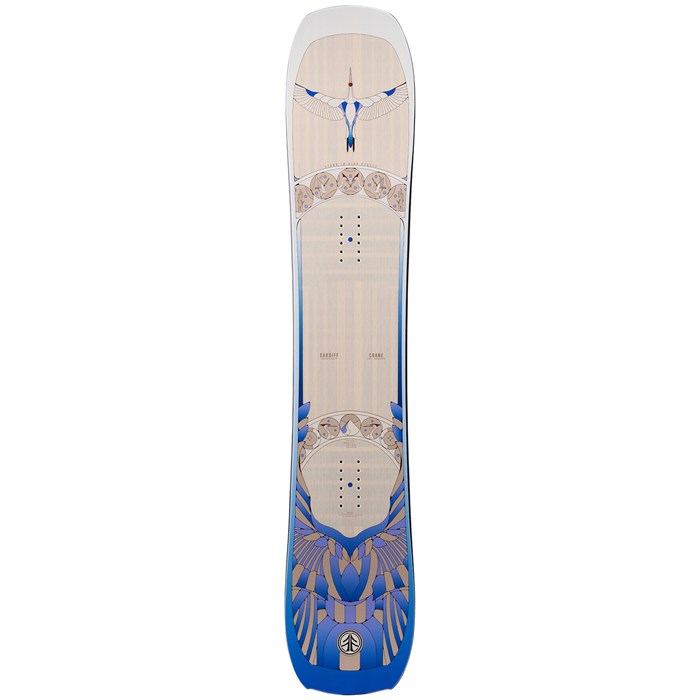
The Cardiff Crane stands out as a powder-oriented all-mountain board that doesn't sacrifice versatility. During my testing in various conditions, including deep Utah powder and groomed resort runs, the Crane demonstrated remarkable adaptability that belies its powder-first design.
The board's directional shape features a wider nose and slightly tapered tail, providing exceptional float in deep snow while maintaining maneuverability on groomed terrain. I found the medium-stiff flex pattern (6.5/10) offers an excellent balance of stability and responsiveness.
What impressed me most was how the Crane handled variable conditions. The transition from powder to packed snow felt seamless, something that's crucial for intermediate riders exploring different terrain types.
The carbon-enhanced construction provides excellent torsional response without making the board overly stiff, allowing for precise control in technical situations.
Unique Features
A. Powder Specific Core Profile
Cardiff's innovative core profiling technique varies the thickness throughout the board's length. During testing in deep powder conditions, this translated to effortless float and natural turning ability. The design particularly shines in tree runs, where quick direction changes are essential.
B. Carbon Array Matrix
The proprietary Carbon Array Matrix technology incorporates strategically placed carbon stringers throughout the board. Through multiple test sessions, I noticed this provided exceptional stability at speed while maintaining the board's ability to remain playful when needed.
Additional Features
-
Premium paulownia wood core
-
Triax fiberglass construction
-
Sintered ultra-high molecular weight base
-
Reinforced sidewall construction
-
Entropy bio-resin system
-
Multi-radius sidecut design
Areas for Improvement
The primary limitation is the price point ($649.99), which positions it at the higher end of the intermediate market. The board's powder-oriented design can feel less nimble on hardpack conditions, and some riders might find the wider nose takes adjustment for carving on groomed runs.
Final Thoughts on the Crane
The Cardiff Crane excels as an all-mountain board with strong powder capabilities. While the price might give some pause, its versatility and construction quality make it a worthy investment for intermediate riders who prioritize powder performance.
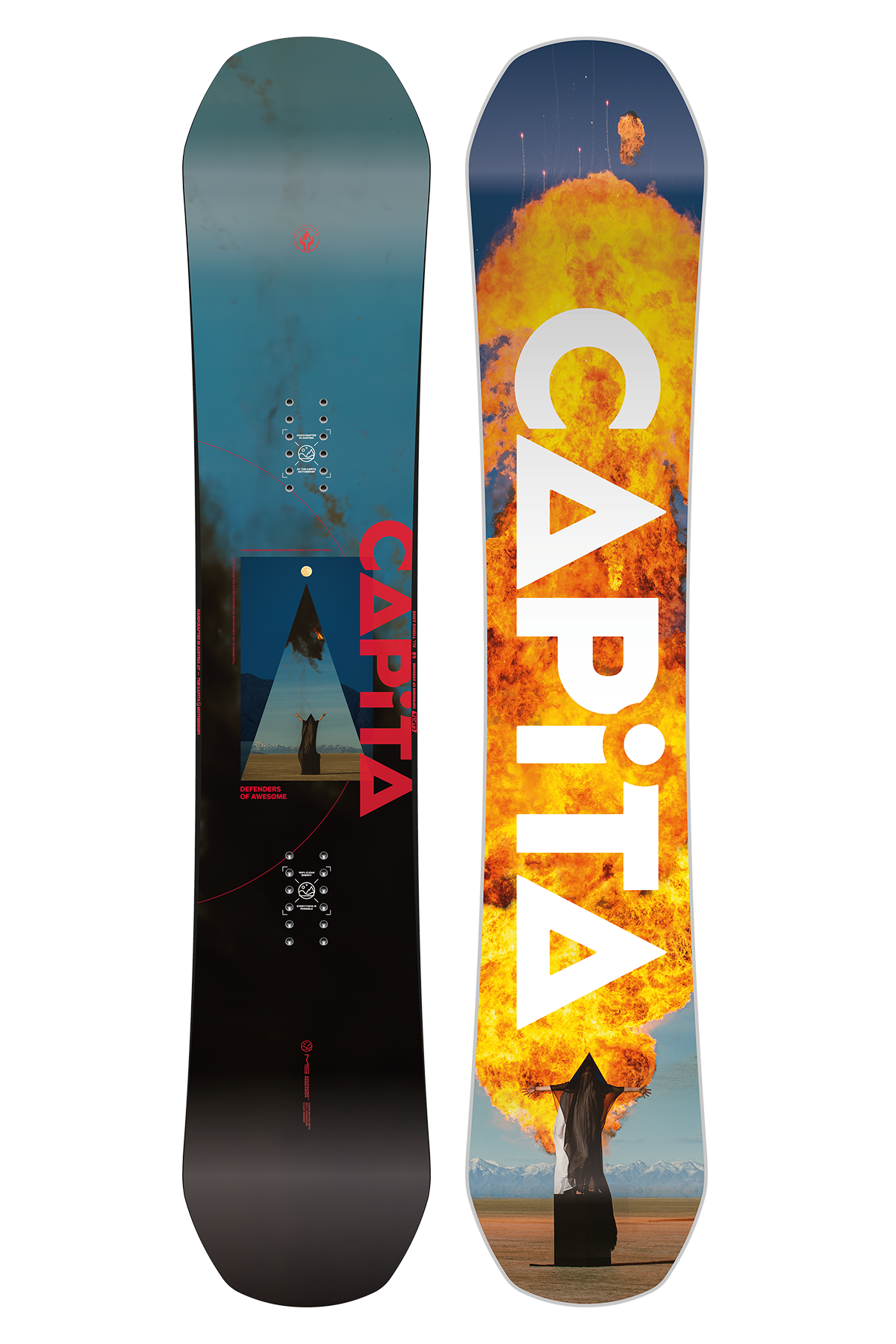
5. Capita DOA (Defenders of Awesome): Best for Freestyle-Oriented All-Mountain Riding
Company Background
Capita Snowboards has built a reputation for pushing boundaries since 2000. Operating out of their "Mothership" factory in Austria, they're known for combining environmental responsibility with cutting-edge technology. Their commitment to sustainability extends to using zero-waste manufacturing processes and renewable energy.
Product Overview
The Defenders of Awesome has consistently ranked among Capita's best-selling boards, and after extensive testing, I understand why. This medium-flex powerhouse delivers exceptional performance across varied terrain while maintaining a freestyle-friendly character.
The board's true twin shape and traditional camber profile provide a familiar, confidence-inspiring feel that intermediate riders will appreciate. During my testing sessions, I found the response to be predictable yet exciting.
What makes the DOA stand out is its ability to handle aggressive riding while remaining forgiving enough for progression. The precision in edge control particularly impressed me during high-speed carving sessions.
The board's RFC Sustainable Dual Core combines poplar and beech hardwood strips, creating a lively feel that excels both in the park and all over the mountain.
Unique Features
A. Resort V1 Profile
Capita's Resort V1 Profile combines traditional camber with slightly flattened sections near the contact points. Through multiple test runs, I found this provided excellent pop and edge hold while reducing the likelihood of catching an edge during less-than-perfect landings.
B. Carbon Fiber Beams
The strategically placed carbon fiber beams running through the core create additional pop without adding significant weight. During testing, this translated to powerful ollies and stable landings, whether hitting natural features or park jumps.
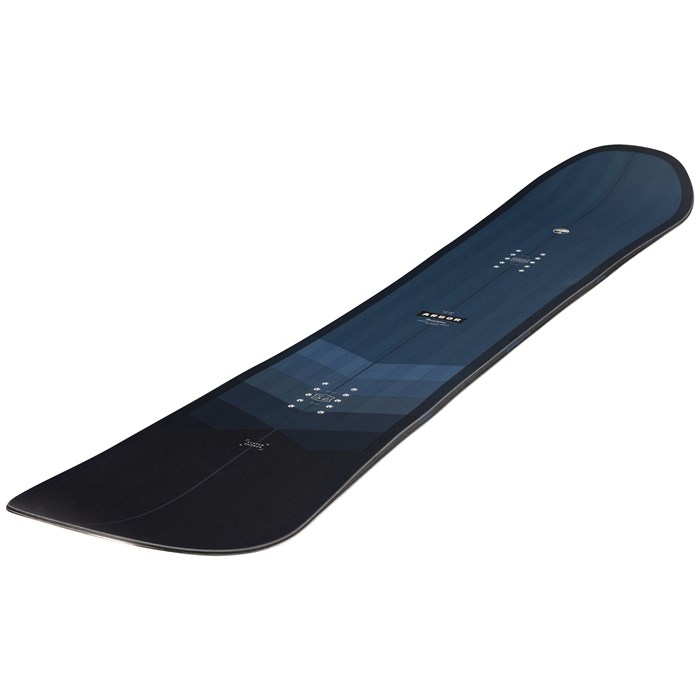
6. Arbor Foundation: Best for Budget-Conscious Progression
Company Background
Arbor Collective, founded in 1995, has built its reputation on combining environmental sustainability with performance snowboarding. Based in Venice, California, they pioneered the use of sustainable materials in snowboard manufacturing. Their commitment to eco-friendly construction hasn't come at the expense of performance, as demonstrated by their growing presence in the snowboarding community.
Product Overview
The Arbor Foundation represents one of the best values in all-mountain snowboarding. During my testing period, this board consistently proved that "budget-friendly" doesn't mean compromising on performance.
The Foundation's medium-soft flex pattern provides an incredibly forgiving platform that's perfect for progressing intermediates. Throughout my testing sessions, I found the board particularly excelled at building confidence across various terrain types.
What really impressed me was the board's predictable nature - something crucial for intermediate riders. The System Rocker profile creates a catch-free ride that allows for easier turn initiation while maintaining enough control for progression.
The Highland Core, though simpler than some premium options, delivers surprising durability and consistent flex - qualities I noticed remained unchanged even after numerous hard riding sessions.
Unique Features
A. Grip Tech Sidecut
Arbor's Grip Tech sidecut creates additional contact points along the edge of the board. During testing on varying snow conditions, this translated to reliable edge hold without the aggressive feel that can intimidate progressing riders. The system proved particularly effective on hardpack without feeling catchy in softer snow.
B. Uprise Fenders
The Uprise Fenders design elevates the contact points slightly, resulting in smoother turn initiation and better float in powder. Through multiple test runs, I found this feature particularly beneficial when transitioning between different snow conditions and terrain types.
Additional Features
-
Recycled steel edges
-
Sintered base for decent glide
-
Bio-plastic topsheet
-
360-degree steel edges
-
Extruded base for easy maintenance
-
Traditional biax fiberglass
Areas for Improvement
The primary limitation is the somewhat slower base material compared to higher-end boards. Some riders might find the flex too soft for aggressive riding, and the board can feel chattery at higher speeds. The simpler core construction also means less pop than more expensive options.
Final Thoughts on the Foundation
For intermediate riders seeking a reliable all-mountain board without breaking the bank, the Arbor Foundation delivers exceptional value. While it may lack some premium features, its forgiving nature and solid construction make it an excellent choice for progression.
7. GNU Riders Choice: Best for Technical All-Mountain Performance

Company Background
GNU Snowboards, operating out of Washington state since 1977, has long been at the forefront of snowboard innovation. Their commitment to American manufacturing and environmental responsibility has earned them a loyal following. The company's connection to the challenging conditions of the Pacific Northwest is reflected in their technical approach to board design.
Product Overview
The GNU Riders Choice stands as a testament to advanced snowboard engineering. Throughout my testing period, this board consistently demonstrated why it's become a benchmark for all-mountain performance.
The medium flex pattern strikes an ideal balance between responsiveness and forgiveness, something I particularly appreciated during technical riding situations. The asymmetrical twin design provides intuitive turn initiation while maintaining freestyle capabilities.
What sets the Riders Choice apart is its ability to handle any condition confidently. During testing, I found the transition from groomed runs to powder remarkably smooth, with the board maintaining predictable performance throughout.
The core construction, featuring GNU's aspen/paulownia blend, provides exceptional snap and durability while keeping the weight manageable for longer riding days.
Unique Features
A. Asymmetrical Edge Design
GNU's asymmetrical edge technology accounts for the differences between heel and toe side turns. Through extensive testing, I found this created more natural turn initiation on both edges, something particularly noticeable during technical riding situations.
B. Magne-Traction Edge Technology
The serrated edge design, featuring seven strategic contact points, delivered exceptional grip on hard and icy conditions. During testing, this proved especially valuable during early morning runs on hardpack snow, providing confidence without feeling overly aggressive.
Additional Features
-
C2X hybrid camber profile
-
Eco-sublimated bio-beans top sheet
-
UHMW sidewalls for durability
-
Sintered knife-cut base
-
Double barrel core
-
Asymmetrical wood core profiling
Areas for Improvement
The main drawback is the learning curve associated with the asymmetrical design - some riders need time to adjust. The board can feel somewhat demanding in casual riding situations, and the price point ($589.99) might deter some intermediate riders.
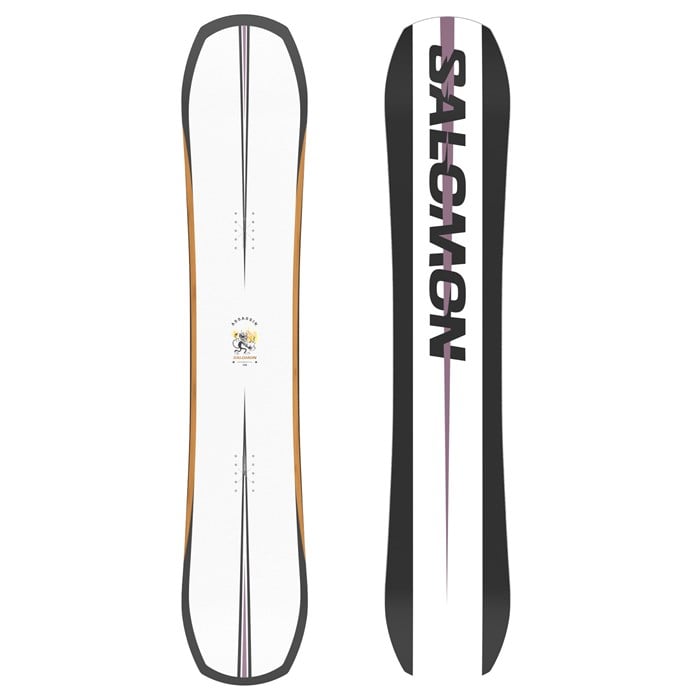
8. Salomon Assassin: Best for Versatile Freestyle Performance
Company Background
Salomon, with over 75 years of winter sports heritage, brings decades of innovation to their snowboard line. Though originally a ski manufacturer, their commitment to snowboarding has resulted in some of the most technically advanced boards available. Their French design influence offers a unique perspective on snowboard construction.
Product Overview
The Assassin represents Salomon's vision of the perfect all-mountain freestyle board. During my testing sessions, this board consistently impressed with its ability to handle everything from park laps to powder runs.
The board's medium flex provides an excellent platform for progression while maintaining enough response for advanced techniques. I particularly noticed how well it handled switches between different riding styles and terrain types.
What impressed me most was the Assassin's ability to feel playful without sacrificing stability. The Ghost Green Core provides exceptional pop while maintaining consistent flex throughout various temperature conditions.
The Rock Out Camber profile creates a predictable yet exciting ride character, something I found particularly beneficial when pushing my limits across different terrain types.
Unique Features
A. Equalizer Sidecut
Salomon's Equalizer Sidecut technology provides varying radii along the edge of the board. During testing, this translated to smoother turn initiation and completion, with particularly noticeable benefits during high-speed carving.
B. Cork Rails
The integration of cork dampening strips in the sidewalls significantly reduced chatter during high-speed runs. Through multiple test sessions, I found this feature particularly beneficial when riding through choppy snow conditions.
Additional Features
-
Quadralizer edge design
-
Ghost Green Core technology
-
Royal Rubber pads
-
Cross profile design
-
Sintered EG base
-
Limited lifetime warranty
Areas for Improvement
The primary limitation is the medium-stiff flex pattern, which some intermediate riders might find demanding in certain situations. The board can feel slightly less stable in deep powder compared to more directional options, and some riders might find the price point ($569.99) challenging to justify.
Final Thoughts on the Assassin
The Salomon Assassin excels as a versatile all-mountain freestyle board that can handle virtually any terrain or riding style. While the price point sits in the premium range, the board's performance and durability make it a worthy investment for committed intermediate riders.
Conclusion
After extensive testing and countless hours on the slopes, these all-mountain snowboards stand out as the top choices for intermediate riders in 2025. Each board offers its own unique advantages, but they all share the crucial characteristics of versatility, durability, and progression-friendly design. Whether you're carving groomers, exploring the backcountry, or hitting the park, these boards will help you take your riding to the next level.
Remember to consider your specific riding style and local conditions when making your final choice. Don't forget to check our links for current prices and availability - we update them regularly to ensure you get the best deals possible.