The Arbor Clovis commands attention as a freeride powerhouse that bridges the gap between all-mountain versatility and dedicated powder performance. This directional charger takes design cues from surfboard shaping traditions while incorporating modern snowboard technology to create an experience that feels both nostalgic and cutting-edge. When pointing it down steep, technical terrain or floating through untouched powder fields, the Clovis reveals its true character as a confident, capable mountain explorer.
Arbor has cultivated a well-deserved reputation for craftsmanship and sustainability over its 25+ years in the snowboard industry. Their commitment to using sustainable materials and thoughtful design has earned them loyal followers among environmentally conscious riders without compromising on performance. The Clovis represents Arbor's premium approach to freeride board design, combining their woodworking heritage with technical innovation.
Key Specifications:
-
Available Lengths: 157cm, 160cm, 163cm, 166cm
-
Effective Edge: Longer than average for superior edge hold
-
Width: Mid-wide (25.8cm - 26.4cm waist width depending on size)
-
Flex Rating: 7/10 (Medium-Stiff)
-
Shape: Directional with tapered tail (18mm taper)
-
Stance: Setback 25mm
-
Core: FSC® Certified Highland Core (Poplar/Paulownia blend)
-
Sidewalls: 360° full-wrap steel edges with sintered sidewalls
-
Base: Premium sintered base with bio-plastic inlay
-
Special Features: Arbor System Rocker with Grip Tech edges
1. Flex Pattern and Response

The Clovis delivers a sophisticated flex pattern that perfectly matches its freeride mission. With a flex rating of 7/10, it provides the stability needed for high-speed runs through variable conditions while maintaining enough torsional give to navigate technical terrain. The stiffness is concentrated between the bindings and tail, while the nose has more forgiveness for improved float and bump absorption.
What impresses me most about the Clovis' flex is how it manages to be both powerful and accessible. When driving into a carve or launching off a natural hit, the board responds with immediate energy return and precision. Yet it's not so unforgivingly stiff that intermediate riders would find it intimidating. Arbor has struck an impressive balance here.
The Highland Core combines poplar with lightweight paulownia wood in strategic zones, creating a lively feel that's responsive without being harsh. The wood selection is typical of Arbor's thoughtful approach to material choices – optimizing performance while considering environmental impact.
2. Camber Profile and Edge Hold
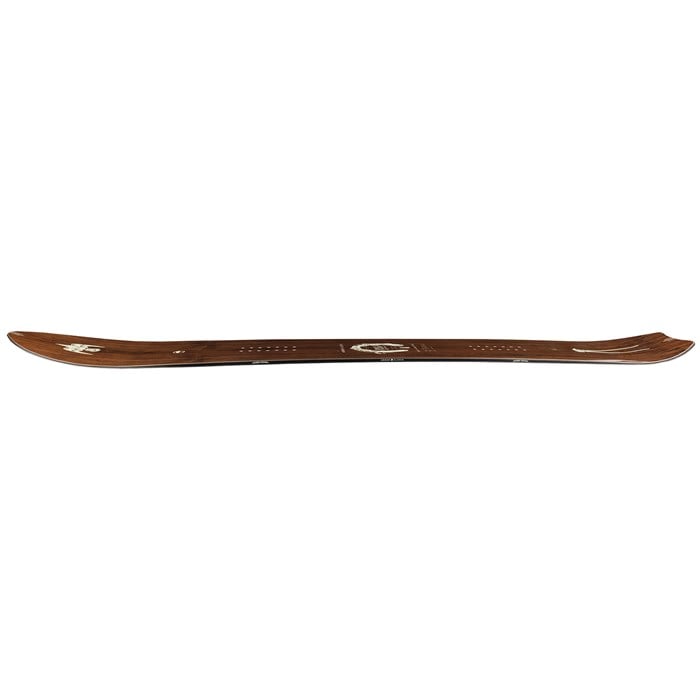
Arbor equips the Clovis with their System Rocker profile – a parabolic rocker that places the contact points progressively further away from the center as you move toward the tip and tail. This design creates predictable turn initiation while maintaining the float benefits of rocker.
To compensate for the reduced edge hold typically associated with rocker profiles, Arbor implements their Grip Tech – additional contact points under your feet that provide targeted edge pressure where it matters most. This combination creates impressive edge hold without the catchiness often associated with traditional camber.
On hardpack and ice, the Clovis surprised me with its tenacious grip. While carving through an early morning groomer session before hitting the backcountry, I could confidently lay into turns without washout concerns. The edge hold inspires confidence when navigating steep, firm entrances to powder fields – a crucial attribute for a dedicated freeride board.
3. Torsional Rigidity
The Clovis exhibits calculated torsional stiffness that balances stability with maneuverability. It's rigid enough between the bindings to provide precise response when driving through carves, yet offers enough torsional flex in the nose and tail to navigate uneven terrain without getting bucked.
I particularly appreciated this torsional character when riding through tracked-out powder fields and variable conditions. The board transmits enough feedback to maintain awareness of changing snow textures without transferring every bump and vibration directly to your feet.
Arbor achieves this refined torsional behavior through their Highland Core's strategic wood placement and their Double Barrel I fiberglass configuration. The result is a board that feels solid when riding at speed but can still be manipulated when needed for quick-response situations.
4. Float Performance
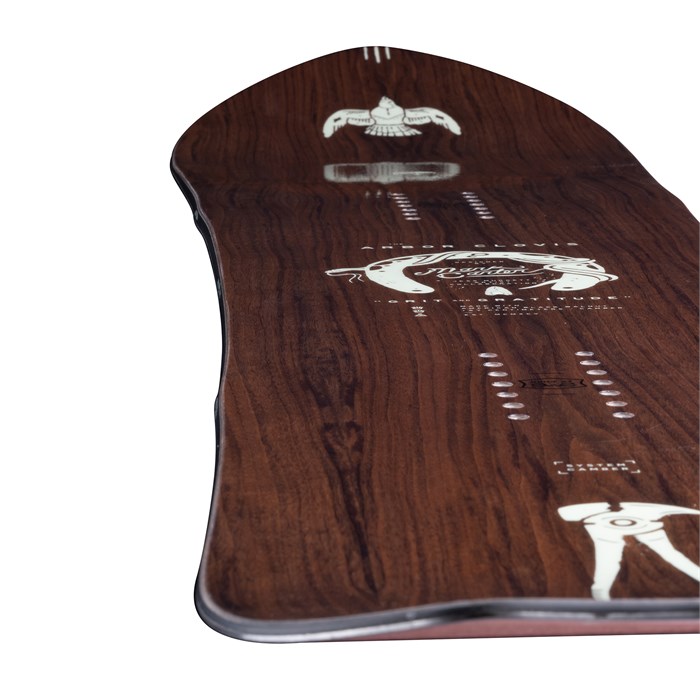
Float is where the Clovis truly excels, thanks to its directional shape, significant taper, and rocker profile. The wide, upturned nose planes effortlessly through powder, allowing for relaxed, back-leg-burn-free powder days.
With 18mm of taper from nose to tail, the Clovis naturally wants to stay on top of soft snow. I tested the 160cm version during a 12-inch storm day and found myself able to maintain float without having to excessively weight the back foot – a common issue with less powder-oriented boards.
What separates the Clovis from pure powder specialists is how it maintains this float capability without sacrificing all-mountain performance. Arbor has calibrated the float characteristics to work harmoniously with their System Rocker profile, creating a board that excels in powder but doesn't feel like a one-condition specialist.
5. Shape and Profile Design
The Clovis features a progressive directional shape with a longer, wider nose transitioning to a narrower swallow tail design. This classic powder shape enhances float while the 18mm taper improves turn initiation and exit.
The sidecut is slightly set back, working with the 25mm stance setback to place your weight naturally over the sweet spot for optimal control. The overall shape encourages a surfier riding style that feels intuitive in powder and flowing terrain.
I found the shape particularly effective when navigating tight tree lines, where the quick-turning tail and float-focused nose allowed for rapid direction changes without losing momentum. The shape's influence is most noticeable when transitioning from open bowls to technical terrain – the Clovis adapts seamlessly to changing conditions.
6. Speed and Stability
Despite its rocker profile, which often sacrifices some stability for playfulness, the Clovis is remarkably composed at speed. The medium-stiff flex and directional shape contribute to excellent tracking even when straightlining choppy exits or bombing groomers back to the lift.
The premium sintered base provides excellent glide even in varied snow conditions. After a proper wax, I found the Clovis maintained speed through flat sections and cat tracks better than many comparable freeride boards.
Vibration dampening is handled effectively by the Highland Core and full-length sidewalls. When charging through chunder or tracked-out powder, the board absorbs enough vibration to prevent foot fatigue without deadening the feel. It's a refined approach to dampening that maintains board feel while filtering out the harshest feedback.
7. Turn Initiation and Carving

Turn initiation on the Clovis strikes an impressive balance between quickness and stability. The rocker profile and tapered shape make edge transitions intuitive, while the medium-stiff flex provides the power needed for aggressive carving.
On groomers, the Clovis can lay down surprisingly deep carves. The Grip Tech edges engage fully when pressured, allowing you to really drive the board through turns without fear of washing out. The progressive sidecut creates a turning radius that feels natural across a range of speeds and terrain.
What I found most impressive was the board's versatility across turn shapes. From quick, skidded turns in tight spots to fully committed eurocarves on wide groomers, the Clovis adapts willingly to different riding styles. This versatility makes it more than just a powder specialist – it's a legitimate daily driver for riders who prioritize directional freeride performance.
8. On-Track Behavior Across Terrain Types
Powder Performance: As expected, deep snow is where the Clovis truly shines. The combination of rocker, directional shape, and taper creates effortless float. The nose planes up naturally, allowing for a more centered stance even in deeper conditions.
Groomed Terrain: On hardpack and groomers, the Clovis performs admirably for a board with its powder focus. Edge hold is excellent thanks to the Grip Tech, and the medium-stiff flex provides stability when carving at speed.
Variable and Chopped Conditions: The Clovis handles tracked-out powder and variable snow conditions with confidence. The directional flex pattern absorbs impacts progressively, preventing the nose from deflecting unpredictably.
Trees and Tight Terrain: Despite being a directional charger, the Clovis remains maneuverable in tight spaces. The tapered tail releases easily, facilitating quick direction changes when navigating through trees.
Park and Switch Performance: While definitely not designed as a freestyle board, the Clovis can handle the occasional natural hit or side feature. Switch riding is possible but not its strength due to the directional shape and setback stance.
9. Overall Riding Experience and Impressions

The Arbor Clovis excels as a versatile freeride board that prioritizes powder performance without sacrificing all-mountain capability. It strikes an impressive balance between specialization and versatility – a difficult feat in board design.
For intermediate to advanced riders who spend most of their time exploring off-piste terrain but still want performance on groomed runs, the Clovis hits a sweet spot. It's forgiving enough to not punish minor technique flaws but responsive enough to reward proper riding mechanics.
I found the Clovis particularly well-suited for resorts that receive regular snowfall but might have a few days between storms. It handles both the powder days and the tracked-out aftermath with equal competence. During a week-long trip to Utah, the Clovis proved its versatility as conditions ranged from knee-deep powder to sun-baked groomers.
One memorable experience came while riding through Mineral Basin at Snowbird after a 14-inch overnight dump. The Clovis effortlessly floated through open powder fields and then maintained composure when navigating the tracked-out, choppy sections lower on the mountain. This adaptability across changing conditions is where the board truly shines.
Conclusion
The Arbor Clovis represents a thoughtful approach to creating a directional freeride snowboard that excels in powder while maintaining impressive all-mountain capabilities. Its blend of traditional shape principles with modern technology creates a ride that feels both familiar and innovative.
For riders seeking a board that prioritizes off-piste exploration but doesn't become a liability when conditions aren't perfect, the Clovis delivers exceptional versatility. The craftsmanship and attention to detail typical of Arbor's production are evident in every aspect of the board's performance.
Whether you're surfing through untouched powder fields, navigating technical tree lines, or simply arcing turns on morning corduroy, the Clovis handles it all with confidence and style. For the directionally-inclined rider who values powder performance but needs all-mountain capability, the Arbor Clovis deserves a top spot on your consideration list. Take it for a test ride – your powder days (and the days in between) will thank you.